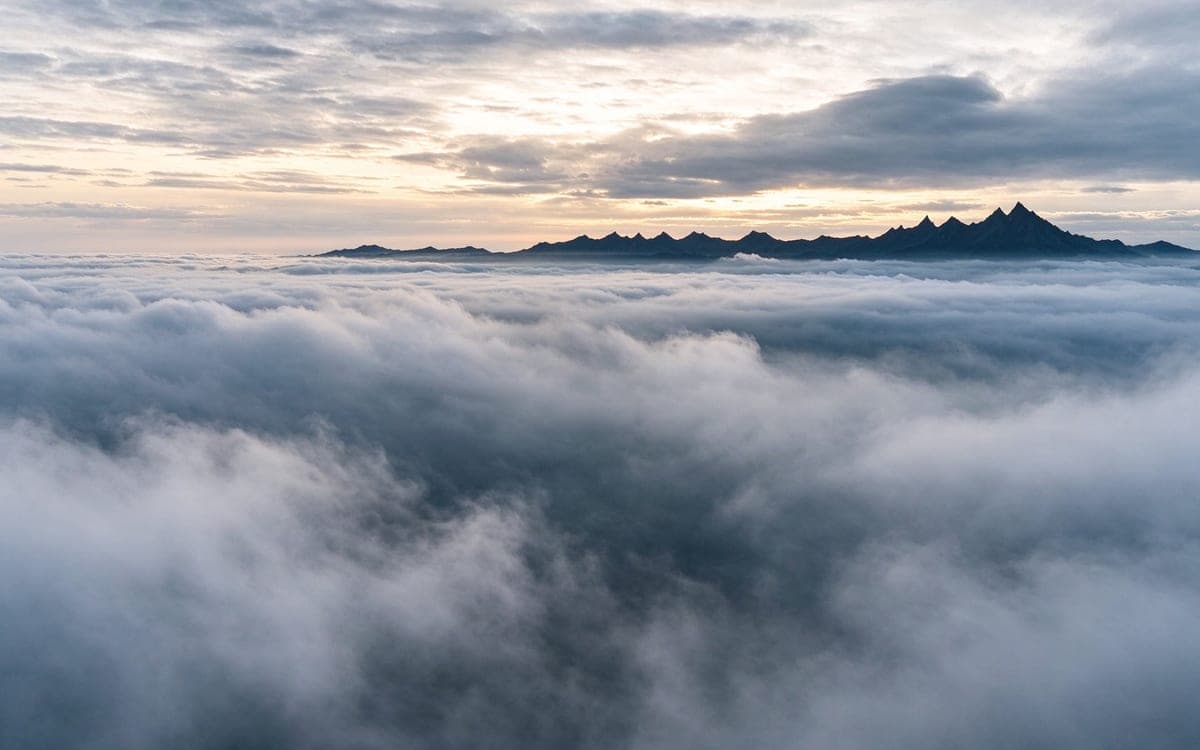
Not a Single Tree in Sight
Above roughly 2,800 meters, there are no trees beyond the treeline. The summit is an alpine meadow: grass growing close to the ground, and stones worn round by the wind.
This altitude does not suit trees. The wind is too strong, the growing season too short, the soil too thin.
So the view from the summit is complete—nothing stands between you and the distance.
Light
Early morning and dusk are the two times when the summit feels least ordinary. The sun is low, and light cuts slantwise along the ridge, turning the meadow a shade of gold.
The name of the East Terrace comes from this: gazing at the sea. On mornings when the weather allows, a sea of clouds gathers in the lower valleys; standing on the summit and looking down, the edges of the clouds are moving, like a receding tide.
And the sea of clouds is not there every day. That is precisely why it is remembered.
Wind and Sound
The wind on the summit is constant, not occasional. It pulls prayer flags taut and carries sound away.
The air is thin, and the same path takes more effort than on flat ground. After a few steps, you have to stop.
Because the air is thin, sound also travels differently—people speaking in the distance sound farther away than they actually are.
Twenty Minutes
The summit does not let people linger long. Wind, cold, and lack of oxygen all remind you that time is limited.
Most people stay up there for about twenty minutes. Then they descend, the temperature rises, the wind weakens, and sound becomes normal again.
Some places are not meant for staying long.